The Story of the Paradis
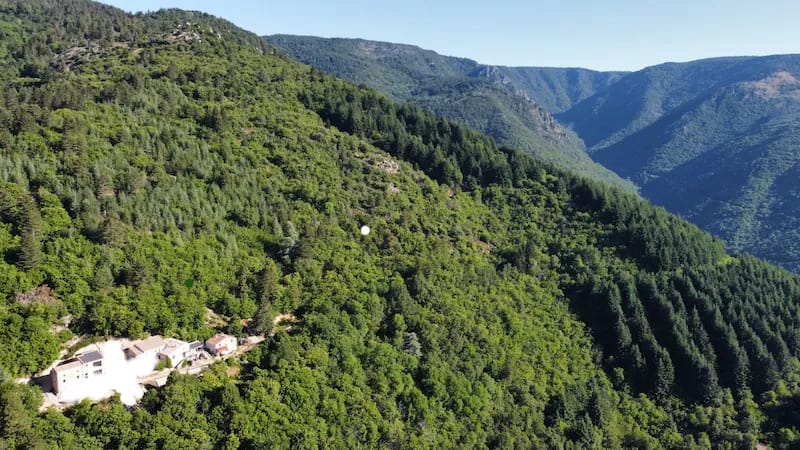
In the Cévennes, they say that place names never lie. They carry the history of the people who lived there — their beliefs, their hopes, their struggles. Le Paradis — the Paradis — is what the elders called this corner of the Vignals hamlet, nestled at 700 metres altitude in the foothills of Mont Aigoual.
A paradise, perhaps, because a spring has run pure here for centuries. Perhaps because the ancient chestnut trees create gentle shade even at the hottest hours of summer. Or perhaps, more simply, because those who took refuge here in history's darkest hours finally found a little peace.
The bread oven — the hamlet's living memory
Long before tarmacked roads, before electricity and grocery shops, the inhabitants of Cévennes hamlets lived in near total self-sufficiency. Every hamlet had its communal bread oven. Women would come in the morning, knead together, exchange news, laugh.
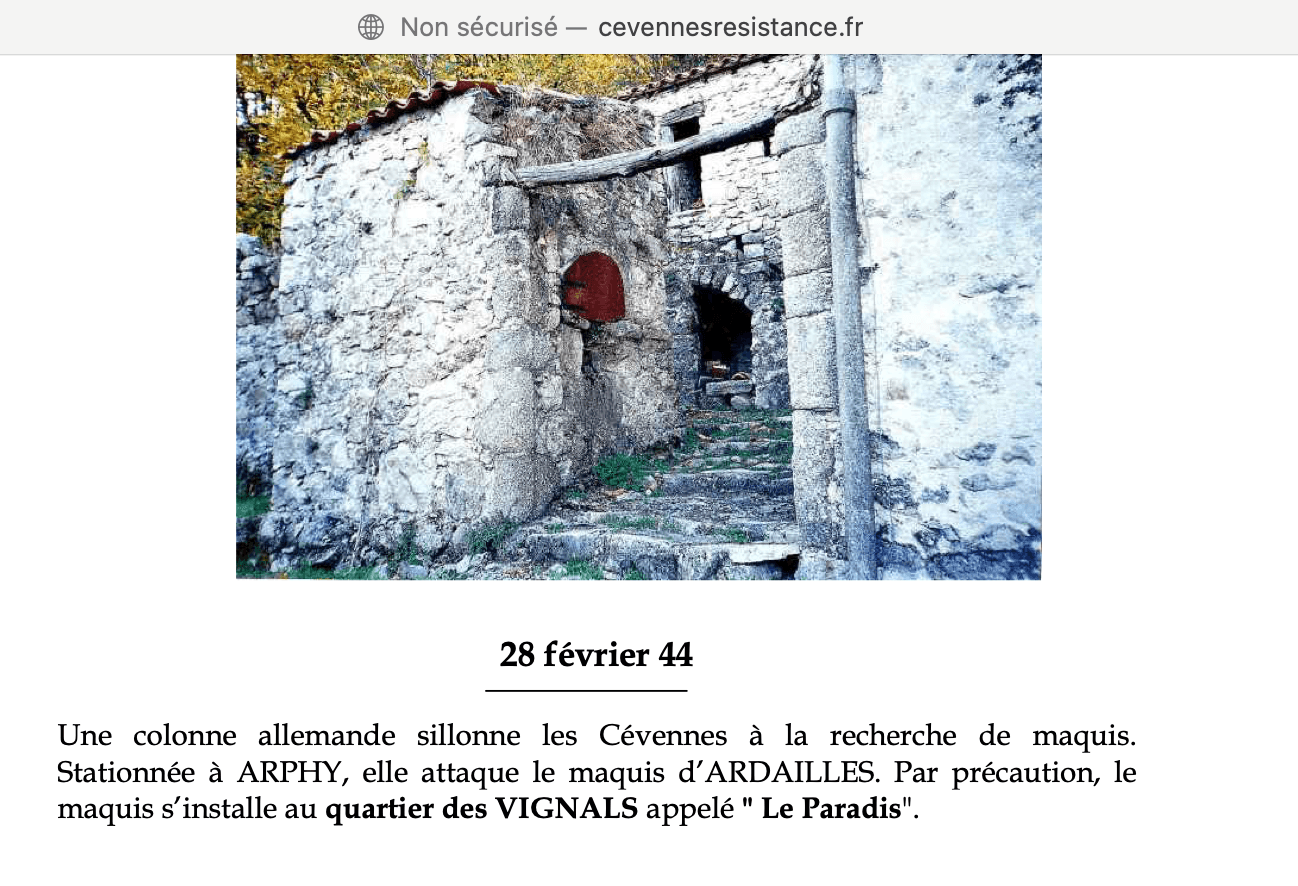
The Vignals hamlet's bread oven is still there. Carved into schist stone, blackened by decades of fires, it has seen entire generations pass through. Cévennes fougasse, chestnut bread, slow-cooked feast-day dishes — all were baked here.
Today, when this oven is lit again for a special evening, something very ancient stirs in the hamlet's air.
1944 — When the hamlet became a refuge
Summer 1944. France is under occupation. In the cities, round-ups. In the Cévennes maquis, resistance.
The Cévennes plateaus have always been lands of refuge — for Protestants during the Dragonnades, for the Camisards in the 18th century. In 1944, it was the maquisards' turn to walk these secret paths.
Young men — many of them evading the Compulsory Work Service — found shelter in this isolated hamlet. The altitude, the chestnut forests, the paths known only to shepherds: Les Vignals offered the discretion that clandestine life demanded.
Little is known. These stories pass in fragments, between families, between stones. But the photograph exists. The maquisards who settled at Les Vignals, photographed one morning, before resuming their journey into the unknown.
The Cévennes have always known how to shelter those seeking refuge. It is in their nature, like the springs that rise between the schist rocks.
A heritage that obliges us
When Laurence and Pierre undertook the restoration of the hamlet, they chose not to erase anything. The schist stone walls were rebuilt identically. The bread oven was preserved. The spring was cleared.
Restoring a place laden with history means accepting a responsibility. The responsibility to pass things on. Not to let these fragments of Cévennes memory be lost — the family names, the old customs, the traces that History left here.
Today, when you stay at Le Paradis des Vignals, you sleep where others before you found refuge, rest, and a little of the calm that the modern world lacks. You may sit at the same stone table where maquisards shared a meal before continuing their journey.
These stones have a memory. They simply ask us to listen.
Hamlet Les Vignals through the seasons, Cévennes